Everyone's cab is comfortable while they're rolling down the highway, but when you don't want to idle, or can't, things get downright unpleasant. Some states have laws against idling; other times, you just want to conserve fuel to make a tight load pay better. If you don't have an alternate solution to idling, you're the one paying the price - in more ways than one.
The price for idling over long periods isn't just the fuel involved, even though that's bad enough when you burn through an additional 3,500+ gallons of fuel yearly idling for comfort. Multiply that total by the cost per gallon for some ugliness.
You also have to take into consideration the number of extra oil changes you'll have to pay for, because now there's fuel and particulates in your oil from extended idling. And let's not forget the scoring of the cylinders because of the damage to your oil. Now you get to plan for a rebuild of the motor sooner than expected. Unless you have a plan.
If that plan includes a Nite Phoenix Climate Control System, you're on the right track. With a deep cycle battery powered AC unit, and a heater that uses only .03 to .06 gallons of fuel per hour - vs. ½ to 1 gallon via idling, this unit will start paying for itself immediately.
The Nite system has the highest cooling capacity available of any battery-powered system on the market. It doesn't matter what the temperature is outside, you can relax, work or sleep comfortably.
This is not a genset, so it complies with all no-idle laws. This unit works from a set of batteries mounted on your truck, and draws power from that. This unit draws no electrical power from your truck when the truck is shut down. And it doesn't just keep you comfortable for a few hours, it can go for up to 10 hours, or more - depending on charge and solar load. To break it down, here's the highlights:
  • Electrified AC unit runs on auxiliary AGM/deep cycle batteries.
  • Larger compressor leads to larger cooling capacity.
  • New LCD digital user interface and battery monitoring system. Features on-board service diagnostics, automatic temperature control and check filter function.
  • Energy-efficient and environmentally friendly. Complies with all idle restriction laws.
  • Approved by the California Air Resources Board (CARB).
  • Installs easily under bunk in 8-10 hours.
  • Shore power and hotel load options.
  • Espar or Webasto diesel fuel-fired heater option.

Nite copy Clean BackgroundThe Nite system also doesn't take a lot of time to install, so you have very little down time. If you've got 8-10 hours, you can have a Nite system installed. Start putting that cash for idling fuel in your pocket. If you want to know how much this system can save you specifically, and how quickly the system pays for itself; call us, and we'll do the calculations for you. 800 849 2178

Universal Concealed Carry Needed

With the recent Supreme Court ruling for concealed carry, and a constitutional right to not only keep, but bear arms better defined, more truckers are beginning to ask about having a single, universal concealed carry permit - allowing them to carry their weapons throughout the United States. And with good reason.

No one likes to talk about it, but there are truckers that do carry weapons – whether it’s legal in a particular state, or not. While someone may well be licensed to conceal carry in one state, unless they go through another state’s licensing, they are not licensed to do so in another. Making their self-defense measures illegal in that state. This presents a series of problems.

The need is obvious. Drivers pick-up, drive through and deliver loads in some of the most dangerous places in America. We often see the results of that with drivers being hurt or killed because they chose to over-night in their rigs in a less-than-safe area, or because of a load heist gone horribly wrong.Concealed Carry

Criminals aren’t afraid to carry illegal weapons to assault their victims, and yet drivers have to be concerned about whether they can carry firepower to protect themselves in these same situations. Because there is no universal carry permit, drivers suffer the consequences of not being able to protect themselves from armed thugs.

Sure, one can go about acquiring a license in all 50 states (good luck in DC and NJ – where, even as a law abiding citizen, you have to prove need), but how long will that take, and at what annual cost for continued licensing of what is supposed to be a constitutional right? How much time does one have to spend trying to obtain licenses, and still try to make a living delivering the products everyone needs?

Allowing our drivers a universal license to defend themselves can’t come soon enough.

Simple Steps To Keep Your Truck Tires From Eating Your Profits Alive

We know tires are expensive. We also know most drivers mean to keep up with their tire maintenance programs, but driving often gets in the way. Until you drop a tread, or pick-up a bolt, it's easy to forget about your tires. Problem is, tires are very unforgiving, and will eat up your profits any chance they get. Don't let them. Here's how.
Any tire showing damage is trying to tell you something. You might need an alignment if you see certain patterns, so knowing which tire patterns to look for helps you identify the problem. Tire sites usually have a chart on types of damage to expect with each problem.
Keep tires of the same diameter together (New with new. Used with used). If not, you end up with one tire skipping and scraping the road because it isn't the same size. Premature wear isn't pretty.
Know when to replace/retread your tires. Minimum legal depth is 4/32" on the steer and 2/32" on others. Tires wear at approximately 1/32" per 13-14,000 miles. Measure your treads now, and mark their expected replacement dates based on your average mileage. Problem solved.
Service those bearings and kingpins. This WILL make your tires wear better.Tire Maintenance
Always install new tires - not retreads, on your steering axles. Better safe than sorry when it comes to steering gear.
Make sure your inflation is correct for your load.Underinflated tires, especially under load, will chew tires quickly.
Adjust pressures for cold climates you are driving in. If you're coming from a warmer area, when you hit cold weather areas the air in your tires contracts, and suddenly you're running underinflated. Check your pressures.
Damaged, improperly balanced wheels will damage tires.Look over all of your wheels for signs of damage - every trip.
Keep radials with radials, and bias ply with bias ply. Don't mix them, or you will see a shorter tire life.
Tires do have a maintenance schedule. Whether you're a single O/O, or have a fleet of trucks, have a plan for replacement and/or repair with an escrow fund and based on mileage and you'll keep those tires from eating your profits alive.

What are the changes in trucking?

Any number of words have been dedicated to writing about the problems in the trucking industry, as well as the difficulties for the drivers themselves. I don’t need to list them here. If you’ve been in trucking for any length of time, you already know these blemishes. That said, what are the positive industry changes for truck drivers?
It’s now much easier to find a job. With a driver shortage that’s only going to get worse in the next 5 years, the opportunities – and pay, are better now that they have been in a while.
It’s safer to be on the road. There has been a crackdown on unsafe trucks, as well as drivers. While we can’t speak to the four wheelers, we do know truck and driver safety has gotten better.
Truck stops are doing a better job of catering to the needs of their customers. From fresh fruit and salad bars, to real grocery stores, they’re beginning to respond to your needs as a driver.
Equipment lasts longer. Even with longer maintenance cycles, todays equipment is mPete Crop_cleaneduch more reliable that those parts of yesteryear. Not just better engineering, but better tires, fuels and lubes make our equipment less prone to breakdown than before. Additionally, more training for owners on proper maintenance seems to be making a big difference.
Electronics makes your life as a trucker easier. From e-logs, to GPS and Skyping with the family, electronics allow us to better manage life on the road. Smart phones also give you communication, and application options that weren’t available, even a few years back.
There are lots of other changes, but these are the big ones in the industry. The real question remains; what modifications would you like to see in the industry?
It’s already been a year!? Weren’t we just making sure we wrote 2014, instead of 2013? Well, as ECTTS Year in Reviewyou might expect, we need to review the ECTTS year that was 2014, and let you in on some things that are going to happen in 2015.
With the introduction of a new parts web site, we accomplished one of our big goals this year. This had been planned for a while, and the implementation took a bit longer than we thought, but our new e-commerce site looks great, and works even faster. You can find our great new site at https://parts.ectts.com/index.php, if you haven’t already been there. It’s not just a new design, though. We’ve added new ways to pay, as well as a chat function, so you can ask us questions and get immediate feedback. With larger graphics, and redesigned categories, it’s easier to navigate, as well.
Just as before, we’ve also been busy writing and blogging original articles about our industry. This year, we’ll be bringing you even more of them each month, as well. Like the articles, the blog photos and artwork are all original, and created right here. If you’re interested, you can see all of our latest blogs right here: https://parts.ectts.com/index.php/blog/
Some blogs from last year you might find interesting:
Like the parts website, our newsletter has been redesigned from the ground up. We now bring you more articles, artwork and insight about our industry. You’ll also notice our new specials. We’ve tried to make them even better than they were before, so be sure to look for them in your e-mail. You can sign up for our e-mail newsletter on our home page. Just look for this area:
It probably goes without saying that you will also find us on social media. One of the big changes this past year is that we’ve begun posting on a daily basis, or more, according to what’s happening here at East Coast Truck and Trailer Sales. If you’ve not been to our social pages, we would invite you to drop by.
So, what are we doing different next year? Just like our parts site, we’ll be redesigning our web site for ECTTS.Com, as well as making our parts site even better. You’ll notice new ways to ship your orders, contact us, and  look at trucks. In all, we want to be your go-to site for trucks, parts and service. If you know of a way we can improve in the new year, please feel free to contact us on our web page, e-mail address or simply phone us. We can’t wait for the new year, so we can serve you even better.

Protect Your Investment. Winterize your Rig

It's that time of year, yet again - time to winterize your rig. And while the below is by no means a comprehensive list, it is a good way to start your winterization plan.
One of the few things typically taken care of for you is your fuel blend. You already know that your truck can be harder to start in winter, and to combat this, fuels are blended with 1D and 2D types of diesel for faster ignition. In spite of that, you'll still want to check the cetane number (CN). The higher the better in winter, as it's a measure of how quickly the fuel ignites. That said, let's get to the list you do have to worry about:
Hoses, radiator and belts - In the warm months, rubber and plastic might work perfectly well, but cold weather will test all of these components. Before it gets cold, check for small cracks, rub marks or bulges that can lead to a failure down the line. It may not happen today, but parts will fail at the least convenient moment, and keep you from making money. Change them if they look even the slightest bit suspicious.
Anti-freeze - Have your anti-freeze tested before the winter sets in. You need it to be at the best possible freeze point for the entire season. If you don't remember the last time you had it changed, it's probably time.
Batteries - When was the last time you had your batteries tested? If your batteries are between 4 and 6 years old, you need to consider replacing them before the season even begins. If they're younger than that, you still need to have them tested - under load.
Engine components - Check to see what type of equipment you have to make your rig start easier in the colder climates. If you have a block heater, intake pre-heats or glow plugs; make sure they are functioning correctly before you really need them.
Anti-gelling additives - As the name implies, this keeps your fuel from gelling in the cold temperatures. Use them.
Fuel/water separator - keeping water out of your fuel is always a good idea, but even more critical in the winter when it can freeze a fuel line. If you don't have one, get a fuel water separator for your rig. Minimize the amount of condensation that can collect by fuelling late in the day, if possible.
Air Dryers - Your break systems are designed to use dry air. In freezing temperatures, water/fluids can create an ice blockage and prevent your breaks from functioning. Air dryers help prevent that from happening. The air dryer sits between compressor and the wet tank, and should have the filter changed before the winter begins. Don't forget to drain your reservoirs periodically, as well.
Heating - When you check the in-cab heat systems, or open the valve - in some older trucks; change your in-cab filter, as well. You wouldn't believe what gets stuck in those filters over time. This contributes to slow cabin air, and can make it less comfortable for you in the colder climates.
Wiring - Like your battery, wiring is critically important to monitor. Rubbing, and exposure are two things that are tough on your wiring. Check all the areas you can for damage. Anywhere wiring touches another component is where you need to heavily scrutinize.
Sometimes you can do all of the above and still run into trouble on the road. You need prepare for this, as well. Keep extra blankets, water, food and survival supplies in your truck at all times. It takes up some precious room, but when you need it, it's well worth the space.
Keep rolling. Keep safe.

Are You Really Prepared For The Economic Upturn?


It’s coming to a trucking business near you. You’ve felt it creeping up on you for any number of months, but now it seems like it’s right in your face. The economic upturn is going to make your life a wreck if you’re not prepared.
So what’s the big deal about the economic upturn in the trucking industry? Remember those days when you had to cut back, and scrape for loads? Remember all the maintenance you had to let go until you could afford it, or the equipment you didn’t buy because it didn’t make sense at the time? You lost money then, and now you’ll lose more 20141104_154731 Stampmoney if you’re not prepared to take advantage of the opportunities available.
What’s going to hold you back? Unless you kept and maintained all of your equipment and drivers from 2010, you’re probably going to be lacking the resources to tackle all the loads you can. The good news is that you’re not the only one. The bad news is that you’ve got some catching up to do. Fortunately, everyone else is in the middle of getting caught up, as well. The longer you put it off, the less revenue you’re going to be bringing in later.
Perform maintenance
Where to start? Maintenance and updates are always the beginning. Bring your existing equipment up to spec, and update how you track your maintenance, your drivers and loads. Without proper maintenance, your fleet dies a lingering, costly death. Some states won’t even let you across their border without certain equipment, so there’s real incentive to make that maintenance happen.
Without proper tracking of your field assets, you have no way to determine where your potentially blossoming profits are spent. Additionally, before you can even consider new equipment, you have to have a way to make sure your existing equipment is being used in the most efficient manner possible. Adding equipment doesn’t just20141104_154300 Cropped Stampedadd capacity, it adds maintenance and man hours.
Update your equipment
The industry, and electronics have improved dramatically since 2010. Electronic logging makes tracking HOS easier, as well as determining when your drivers need to rest. Other computer and phone applications make it easier to find the cheapest diesel in an area, certified CAT scales and rest stops on the road. Look into these if you’re not using them. Additionally, look for an expense tracking software suite. You need to be able to drill down to any expense, anywhere in your fleet.

Thanksgiving Special!

Welcome to East Coast Truck and Trailer Sales Newsletter

It's the time of year for giving thanks to those we appreciate. Our Customers.
To all of our customers we will offer FREE shipping on all orders over $200.00 placed between Thur, Nov 27th - Sunday, Nov 30th. (Excludes ODF items and clearance items.)
Simply sit back, log on to Parts.ECTTS.Com and get your shopping done without having to brave the weather, or the crowds. Happy Thanksgiving!


The Perfect Turkey?


If you're fixing turkey this thanksgiving (and who isn't?), you're probably expecting a moist, juicy bird. While everyone hopes their bird will turn out that way, what if there was a way to make it happen every time?
This is going to seem strange, at first, but you'll get the idea of why it's necessary.
First, after you have removed the giblets, and rinsed the bird, place the turkey in the roasting pan upside down (breast meat down).
Second, do not stuff the bird. Place ¼ cup of butter inside the bird, and place the remaining ¼ cup of butter in the pan with 1 cup of water.
Now cover the bird, and cook for 3 hours and 3o minutes (13lb bird), at 350 degrees F.
In the last 30-to 45 minutes you need to turn the bird over to cook without the cover, until brown, if you want the breast skin brown and crispy.
After the turkey is done (Thigh meat is 180 degrees F) , You can use the remaining juices to make gravy, or work into the dressing, according to your tastes.
Some variations of this recipe call for using apple juice, instead of water. Others call for cooking the bird in an oven bag, and using a blend of olive oil and butter. One thing all the cooks have to say about this method is that this produces a moist, juicy bird - every time. Enough said.
On the Road Thanksgiving


So, you're going to be on the road this thanksgiving. That means you're going to be passing by truck stops, and you're going to need to know where some great grub can be found. Problem solved. Here are some of the truck stops that have great food figured out.

Dysart's Truck Stop and Restaurant - Bangor, ME
Berky's Restaurant at Lee Hi Travel Plaza - Lexington, VA
R Place Restaurant - Morris, IL
Iowa 80 Truck Stop - Walcott, IA
Johnson's Corner - Johnstown, CO
Billy Bob's Texas Truck Stop - Fort Worth, TX
Omar's Hi-Way Chef Restaurant - Tucson, AZ

Needless to say, this is only a small sampling. We've tried to compile a list that goes across the continent, but if you know of others you'd recommend, certainly e-mail us, and we'll try to get those out there during the holiday season, as well.


Fifth Wheel Maintenance


OK, so how many of you are thinking about your fifth wheel right now? Probably not many, right? Well like everything else on your truck, it needs maintenance. Which means you also probably need a checklist to do it right. Everyone loves a checklist, and we've got you covered.

1)      First, you're going to need to clean the gunk off that fifth wheel. Some folks go so far as to steam clean it; others simply scrape and clean it with a brush and solvent. You should know that it is recommended that you steam clean not only the top plate, but the jaws and legs, as well.

2)      Next you're going to inspect the upper area and edges for any damage. This can simply be wear and tear, or something more excessive - like missing parts or cracks. You're going to need to find a straight edge, too, because you've got to check the flatness of the fifth wheel. Cracks are obviously bad, as well. Finding them can be tricky if you're not steam cleaning the fifth wheel, but if you check underneath it, you can see any grease making its way through a crack.

3)      Look at the jaw area. Is there any damage, or excessive wear? You should have a test pin from your manufacturer. You're going to use this to engage the locking mechanism. Check the release handle, as well. This needs to be straight and secure. Look for any missing parts. Adjust the locking mechanism.

4)      You'll want to examine the bracket pins and legs for any type of damage (slack, wear or cracks).

5)      Check those Zerks. Obviously, grease fittings should be intact and unclogged.

6)      This is the point where you're going to need the square. Review the flatness of the bolster plate, as well as the kingpin. You're looking for any deformities in either one. No one likes it, but when you find damage in either one, you're going to need to replace it.

7)      Check your kingpin for wear, as well. You're going to need a kingpin gauge for this.

8)      Now that you've made it through the inspection, hopefully without needing to replace anything, it's time to look at the necessary maintenance. First, lubricate the jaw and locking mechanism. You're going to do this with a silicone based spray lube, or some other light oil.

9)      Let's give the zerks something to do now. You're going to use the grease gun for the bracket pin zerks to lube the surfaces above the pin.

10)   Now for the top plate. While many drivers and mechanics apply high quality grease all over the fifth wheel, you only need to grease the rear part, as the action of connecting a trailer will apply the grease to the rest of the fifth wheel.

Note: Not all of these steps apply if you have a fifth wheel with a Teflon disc. The disc is the lubricant.

Height Sticks and GPS

You’ve seen the videos and pictures on the web. You know it happens – just not to you. And this is exactly how it starts. 

Every day we see a video of a truck carrying a large load hitting a bridge, underpass or some other object of civil engineering. In fact, over 60 percent of states say that over-height accidents are considered a significant problem. The problem is so bad in the empire state that New York is installing “Over-Height Vehicle Detection Systems” to alleviate it. (You have to wait for troopers to guide you to another route if you’re over height, and that can’t be an enjoyable process.)

So, how do these strikes happen so frequently when we all know to measure twice and plan the route accordingly? It’s all about safety culture and technology. Just like larger companies, small operations need to instill their safety processes and procedures – especially if they’re currently not in place. 

It’s all about knowing everything about the load you’re carrying. Just as you know when you’re overweight, you also need to know when you’re over height. The only way to know that is to measure for it. If you don’t have a height stick; get one. Today.

Now that you know the height of the load, it’s time to plan the route to the destination. In doing so, there’s one piece of equipment you want to avoid; a noncommercial GPS system. If you’re relying on a GPS system, make sure it’s one used for the trucking industry. Consumer GPS doesn’t show low bridges or hazmat routing. They don’t need to. You, however, need to know. 

Most commercial systems available will adjust your route according to the measurements, axle weights and whether you’re carrying haz-mat. Even the government wants to make sure truckers are aware of the benefits of commercial GPS. FMCSA recently published a visor insert to make sure everyone knows about it when purchasing a truck.

These are just a couple of ways to improve the safety of your organization. There are many more coming your way.


How Are Your Driving Skills At 100+ Miles Per Hour?


It’s cold and absurdly early on this Las Vegas morning, but 30+ people couldn’t be happier. Not just because it’s Vegas, but because East Coast Truck and Trailer Sales is hosting their Richard Petty Driving Experience again. If you’ve never been, the Richard Petty Driving Experience is a thrill ride you control - starting at 100+ mph!

Every year, the folks at ECTTS ask a number of their friends and customers to come out for the driving experience of a lifetime. This is a chance to drive a car as fast as you can – without any fear whatsoever of a ticket. In fact, the faster the better! So much so, we keep track of the stats. 


The day starts with a facility overview of Las Vegas Motor Speedway. There’s roughly 1,500 acres to the Las Vegas Motor Speedway, consisting of over 10 tracks.  There’s the 1/2 mile World of Outlaws dirt track, the quarter mile NHRA drag racing facility known as “The Strip” and the 3/8 mile “Bullring”, which is the home track of NASCAR superstars Kurt and Kyle Busch as well as Brendan Gaughan – just to name a few.

But before you’re allowed to put a 600+ HP car through its paces, you have to go through safety and instruction and in-car/on-track training. This isn’t just a formality if you’re driving these beasts, this is absolutely necessary. You need to know how the brute you’re going to be doing your best to control will handle in a curve, or “out of the groove.” You’ll hear from the instructors/drivers just what you’re going to feel, and at what speed. They know these finely-tuned monsters; they drive them every day.

Now it’s your turn at the wheel; right? Well, first you’ll be taken on a ride-along to get a feel for the track, and experience the car “at speed.” You get to see what it feels like to take a curve as fast as possible without slamming into a wall. Then you get to feel the acceleration push you into the seat – when you’re already doing over 100 mph! You’ll amusedly remember when you used to get a thrill punching the accelerator on the family sedan to pass a sluggish truck. And this is just the instructional phase.


“OK, this should be easy”, you convince yourself, as you climb into the driver’s seat. What you don’t understand – until you try it for yourself, is that the instructor made it look easy because of their experience. For you, getting this race car up to something even close to 130 mph is taking some work. Not that the car won’t do it, but because you’re having a tough time getting up the nerve to go much faster. Way too soon, this thrill ride is over, but you get a chance to see just how much bravado you had. After it’s all over, you get a packet that includes a time sheet with a breakdown of every lap you drove on the track.

Finally, at the end of the day, ECTTS holds a dinner for their customers, friends, and employees. The food’s good, but the stories and laughter are even better. Let’s face it, half the fun of this type of outing is comparing how you did with the rest of the guests. The only problem lies with the inevitable request to see the hard copy of your exploits, to confirm those “enhanced” tales of the track. Chris Kelly, one of our customers, posted this year’s top speed at 141 mph! We’ll keep the lowest speed to ourselves, so as to keep the embarrassment to a minimum.  As we said earlier, we do keep track of the stats.

Keep Your Diesel Particulate Filter From Dying an Early Death

Keep Your Diesel Particulate Filter From Dying an Early Death.

You’re 25 miles out of the truck stop; settling into the long haul, and then the regen warning light comes on - again!You know you just did a parked regeneration to clear the diesel particulate filter yesterday, and you’ve been driving this rig at speed today, so shouldn’t the filter be clean? Well, probably not. Here’s why:

• Unless you’re running a disposable filter system, which are a must in the mining industry and some off-road equipment, the DPF is probably still clogged, but not with soot. The DPF works by trapping soot and other particulates in a network of cells before releasing the smaller gasses through the pores in the filter structure (usually cordierite or silicon carbide). The DPF, like any filter, eventually gets clogged with this material. Unlike other filters, this filter can usually be easily cleared – either while you’re on the road, or parked, by simply heating the filter to the point where the soot burns off to become gasses that pass through the filter. The problem arises when other particles besides soot become trapped in the filter. While hydrocarbons burn, metals and other contaminates from oils in the exhaust don’t burn off at the temperatures used for regeneration, so you end up with a clogged filter – even though you’ve just done yet another regen.

• Why does this happen? The heat from the regen can cause the metal particles to simply fuse into solid masses (sintering), and like the metals, the non-soot particles aren’t going to burn off either. In some cases the filter itself is damaged by the heat being created by the regen. As regeneration happens at temperatures around 850 to 1100 degrees Fahrenheit, and damage happens to some filters at 1200 degrees, the range between clean and damaged can be fairly narrow.

•When the filter becomes clogged with metals and ash; from burning contaminates, it creates high backpressure and triggers a warning on the dash that gets progressively more severe until the truck computer finally throttles back the power – in some cases severely. Filters that become substantially clogged with ash go through what’s called compacting, which can cause filter and engine damage, if not corrected quickly. Overriding the regen causes this compaction. To avoid those consequences, regen every time, on time. Note that the filter will still eventually become clogged with particles other than soot. So what’s the solution? It’s time to have the filter professionally cleaned, as opposed to just clearing the soot.

• Sometimes known as de-ashing, the filter cleaning process begins with an inspection, and then moves through the steps of testing, pneumatic cleaning, thermal regeneration (about 12 hours) and a final air flow test. At the end of the cleaning the air flow test will tell whether it passes for continued use, or needs to be replaced. How often you regen, vs. letting your filter compact with particulates and ash, can greatly affect the usable life of your filter. Similarly, having your filter removed and cleaned regularly increases its lifetime, so this step should be an important part of your regular maintenance schedule.

• Finally, this is not a do-it-yourself job you want to tackle. Unless you have the proper equipment, and knowledge, it will just end up being a very expensive lesson in what not to do yourself. Dealerships and service centers nationwide offer DPF cleaning services; take advantage of it on a regular basis to keep your filter and engine operating at its best.

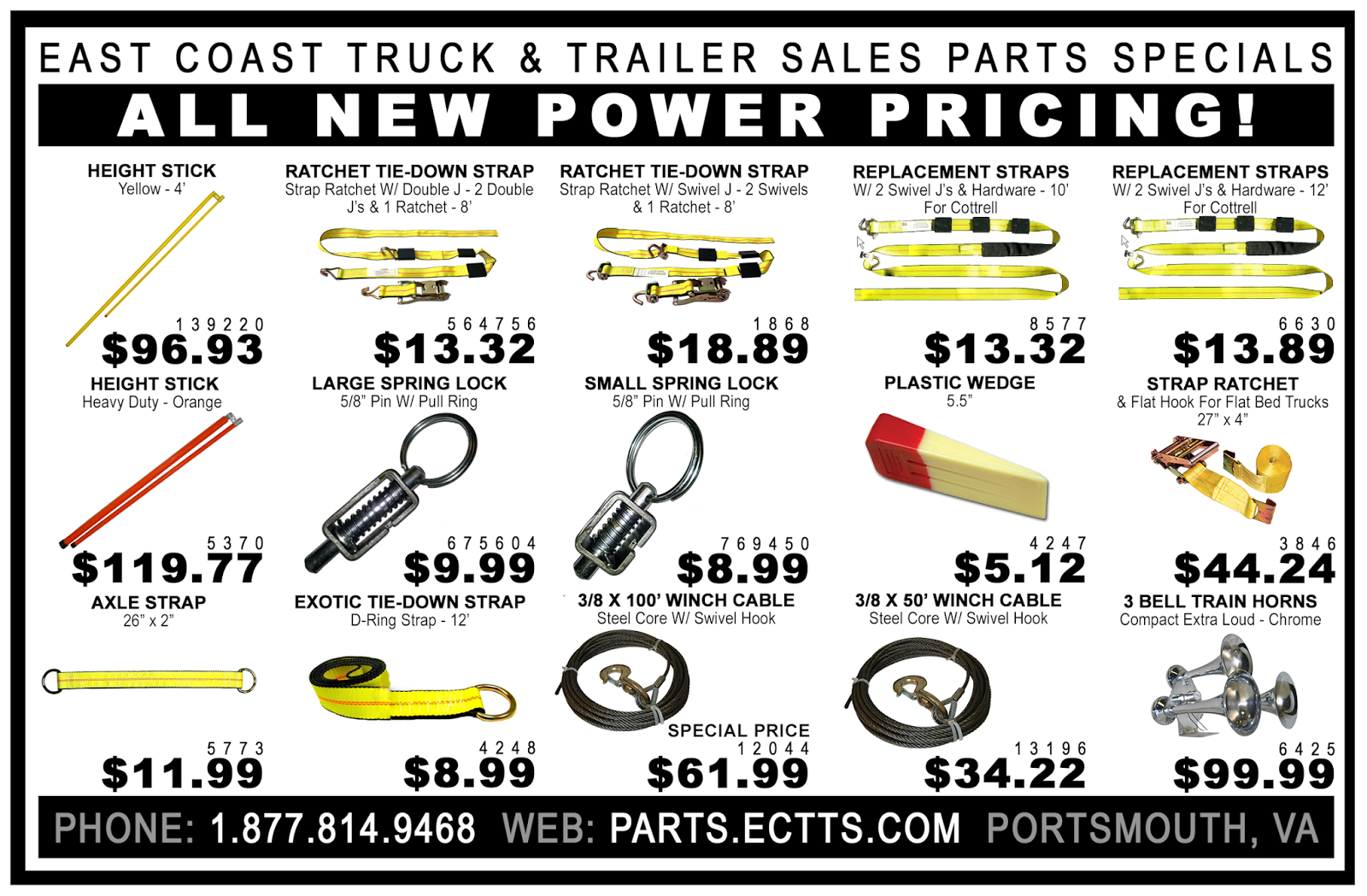
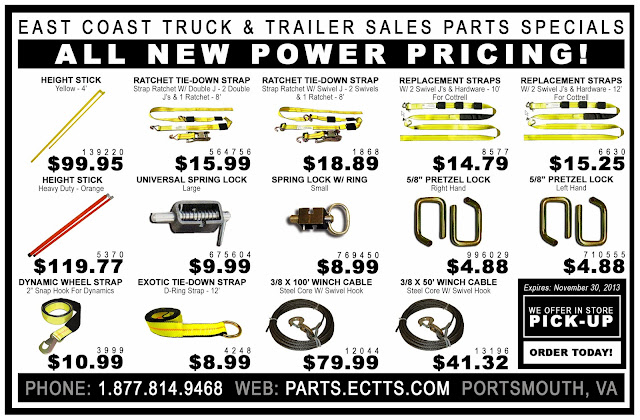
East Coast Truck and Trailer Sales Car Hauler and Equipment Specials

Parts.ECTTS.Com
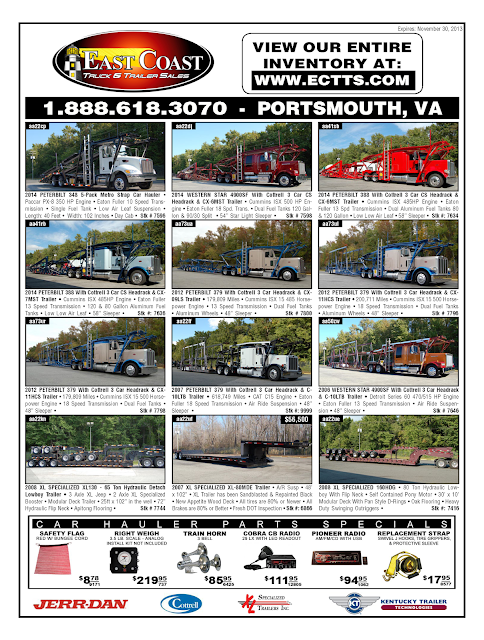
East Coast Truck and Trailer Sales Equipment Specials. Click picture above for parts specials. Click picture below for car hauler deals.
 Car Haulers For Sale

Drastically Extend the Oil Drain Intervals for Your Rig

Drastically Extend the Oil Drain Intervals for Your Rig

Every mile counts. As a hauler you probably hear and say that often. Miles are money, and when you can keep rolling, instead of paying for yet another oil drain - in money and downtime; those miles can pay for more of what you really want.

So, how do you go about extending your rig’s oil life? If you’re like some, you keep idling to a bare minimum. Others depend on advanced formula oils, and expensive synthetics that extend the life of the oil with formulation and additives. While this works, to a certain degree, still others have found a way to keep from draining their oil unless absolutely necessary. The key to long oil life is an oil bypass filter.

Oil bypass filters (OBF) are a proven way to keep your oil clean and dramatically reduce the wear on your engine. This isn’t new technology. Having been around for close to twenty years, this is an established equipment system you can use to make more money in the field immediately. Haulers using oil bypass filters change their oil infrequently and still have the maximum protection from their oil. Oil’s life is dependent on just how badly contaminated the oil becomes. It tends to gather any number of pollutants throughout its usable life - soot, fuel, metals and moisture. All of which can considerably shorten that oil life, and the life of your engine.  An oil bypass filter virtually eliminates those contaminants because it puts your oil through a filter the removes particles down to 1 to 3 microns, and evaporates others so they don’t reduce the oil viscosity. This is far superior to only having a factory installed full flow filter, which only filters down to 20 to 25 microns. Even particles that size can damage your rig’s engine.

The OBF works in conjunction with your standard full flow filter; not in place of it, so there is no loss in oil pressure.  Typically, an OBF will filter about 6 gallons of oil per hour, and is connected to the engine oil supply downstream of the standard engine oil filter. In turn, the oil is treated by the bypass filter system and gravity fed back into your oil pan. It has a separate housing for the filter unit, with a replaceable filter medium, as well as a heat chamber to evaporate fuel and moisture from the oil; thus removing even more contaminants that can affect the ability of your oil to reduce friction.

Oil Bypass Filters to 1 micron

It is an additional piece of equipment to buy for your rig, and you will have to purchase and replace your filter at certain intervals. Additionally, you will have to have your oil tested to maintain the best possible oil condition. You will find, however, that oil testing and filters are readily available at the maintenance facilities you’re probably near on a consistent basis.

The system, on average, should pay for itself in under a year with the benefits of extended oil drain intervals, reduced oil purchases, reduced waste oil costs and reduced rig downtime. That said, this system seems like a no-brainer. So, keep your oil cleaner, rack up those miles, and spend your cash on something besides oil.


Keep safe, and keep rolling.

East Coast Truck and Trailer Sales
2906 Elmhurst Lane
Portsmouth, VA 23701
800-849-2178


#eastcoasttruckandtrailer

Check out our web specials, too. 

Our most popular web specials.
ECTTS.Com

Make an Additional $50,000.00 a Year From Your Rig!

Everyone wants to make more money at their job, but very few people have the opportunity to give themselves a $50,000.00 raise per year. You, as an owner/operator of a tractor trailer, have that opportunity. You’ve probably heard any number of these recommendations before, but we’ve put them all together - and done the math. If you want results, some bad habits need to be broken and some equipment needs to be installed. Let’s start with 5 realistic ways you can make much more money with your rig.

Stop Idling!

You and I both know drivers that have bad habits. First, there’s idling.  Of the 24 hours available, 11 are over the road and the other 13 are consumed idling – usually just for convenience. While there are any number of reasons to reduce idling as much as possible, including laws in some states, consider this:

·         Idling reduces the useful lifetime of your oil. You have a standard lifetime of around 600 hours of operation for over-the-road driving with each oil change. Continuous idling can reduce that to a mere 150 hours! How much are you paying for a standard oil change? How often do you want to be paying for one?  Idling at around 625 RPMs allows for buildup of unburned fuel on the cylinder liners, which is drawn in by the oil sump. This contaminates the oil and shortens the life of the fluid as a lubricant. You’re now paying for more oil changes, more fuel and more engine maintenance; this is your money lost. Even if you choose a higher idling rate to combat some of the oil contamination, you’re now using even more fuel to idle, and you’re still paying more for maintenance, so your costs are still piling up.

·         You’re not making money from your fuel if you’re idling.  Drivers want to drive. That’s how money is made, but there are mandatory down times. What your truck is doing while on that down time is where your money is going; especially since a one-man driver is on downtime more than driving time every single day. Some drivers think of it as a necessary evil, and create the most comfortable environment possible while burning up to a gallon of diesel an hour. That’s almost $50.00 per day in fuel that’s not making you money. Multiply that by the average truck work year, and that’s around $14,000.00. Stop idling unless absolutely necessary and you start making more money.  


·         So, what do you do about it? Install a small generator that runs from your fuel tank, or a separate tank. You can have a very comfortable cab, as well as run your electrics from a small, very efficient generator. There are also electric plug-ins available at numerous truck stops and rest areas, so drivers can be comfortable in any weather, and the heaters can keep the fluids at start-up temp. It actually takes about 14 hours for an engine and fluids to cool to ambient temperature once the rig is shut down, depending on the outside temperature, so worrying about a cold start usually isn’t the problem. There are a host of other solutions out there as well, from solar, to AC battery solutions that will reduce your idling time significantly.

Break Bad Habits!

Ride with enough drivers and you’ll know most seem to have one or two major fuel wasting habits. The first one is almost always their speed. Yes, the load has to be there on time, and drivers want to get the most miles out of their 11 hours, but what if you knew for a fact that dropping your speed from 75 mph to 65 mph would make you $18,000.00 more per year in fuel savings? That’s right; by dropping an average of 10 mph, drivers can gain as much as 1 additional mpg. The difference between the maximum fuel economy RPM and the maximum horsepower RPM range can be as small as 200 RPM. Find out the range for your truck, and take advantage of it. If your average is 6 mpg, plug in 7 mpg to your yearly fuel usage, and see how much more you can make with your truck/fleet just by slowing it down some.

Another bad habit is running out of the top gear.  If you are in the top gear less than 90% of the time, you’re paying for it. Poor shifting habits make for huge losses in fuel. Ten percent less time in the top gear translates into 0.5% mpg losses. And, of course, there’s sudden stopping and fast acceleration to make matters worse. How bad is it? There’s a 30% loss of fuel mileage associated with poor driving habits when a driver exhibits all bad habits at once. Let’s see how that translates into what you could be making. Using our average mileage for an OTR rig of about 6 MPG, with a 30% loss for poor driving, that makes it in the neighborhood of 4.8 MPG. How much do you save with good driving habits? Conservatively, about $30,000.00 per year if you compare fuel usage at each of those values for one year.

You’ll notice we’re well above the $50,000.00 mark at this point, and there’s still more to come. So why am I giving you a lower estimate? Not all drivers, or all trucks, exhibit all of the same problems. Some have good driving habits, but poor idling behaviors; others, vice versa. Still more problems can be isolated to the equipment itself. Which brings us to…

Update Your Equipment!

With the exception of poorly maintained equipment, of all the things that make a truck expensive to operate, the lack of aerodynamics can be one of the worst. If your truck/fleet is still hauling without improvements in aerodynamics, you need to do a cost analysis on the return this equipment provides.

The highest estimate for updating your truck with aerodynamic equipment is that it can add up to 12% to your MPG. That takes your mileage from 6 MPG to 6.76 MPG, with a fuel savings of around $14,000.00 per year. Yes, you will spend several thousand dollars for an upgrade, but that’s a one-time investment that pays you again, and again, over the life cycle of the rig. Additionally, not every upgrade is available for every type of rig, so your results are going to vary with the amount of aerodynamics you can, or do, install. Some equipment you might want to review includes:

A Trailer Gap Reducer and Trailer Side Skirts
A Trailer Boat Tail and Trailer Side Skirts
Advanced Trailer End Fairing
Advanced Trailer Skirts
Tractor Aerodynamics  Package

Finally, there are low rolling resistance tires. These tires are already required in California on all tractors, and are a coming requirement for all trailers in that state by 2017. This sounds like bad news, but for the small additional cost of each tire, there are significant returns. Just as the shape of your truck contributes to greater resistance, so does the design of your tire. Low rolling resistance tires can improve your MPG by up to 8%. Again, taking our average rate of 6 MPG, and adding another 8% to the equation gives you around $9,000.00 per year.

If nothing else, this information should help you determine where to begin to start making more money. If we’re being realistic, each item has its own associated expense. If you’re the driver, you’ll have to spend time relearning good driving habits, determining just how much idling you actually have to do, and how much time you are going to spend in down time to do the upgrades on your rig. If you have drivers working for you, you will have training costs; upgrade costs and management expenses to continue a successful program. If you’re interested in making more money from your business, it’s worth it.

East Coast Truck and Trailer Sales
2906 Elmhurst Lane
Portsmouth, VA 23701
800-849-2178

Free T-Shirt for Truck Driver Appreciation Week

Free T-Shirt for Truck Driver Appreciation Week

In appreciation for your dedication, and hard work as a truck driver, we would like to offer you one of our T-shirts for free. These T-shirts have been a great seller on our website, but during Truck Driver Appreciation Week we're going to give you one for free.  There are a number of designs to choose from, so you're not limited to one type of shirt. We appreciate the work you do. Keep rolling, and keep safe.

Free T-Shirt from East Coast Truck & Trailer Sales